
Railway usage in Leicester still not back to pre-Covid levels
By Nisa Dari
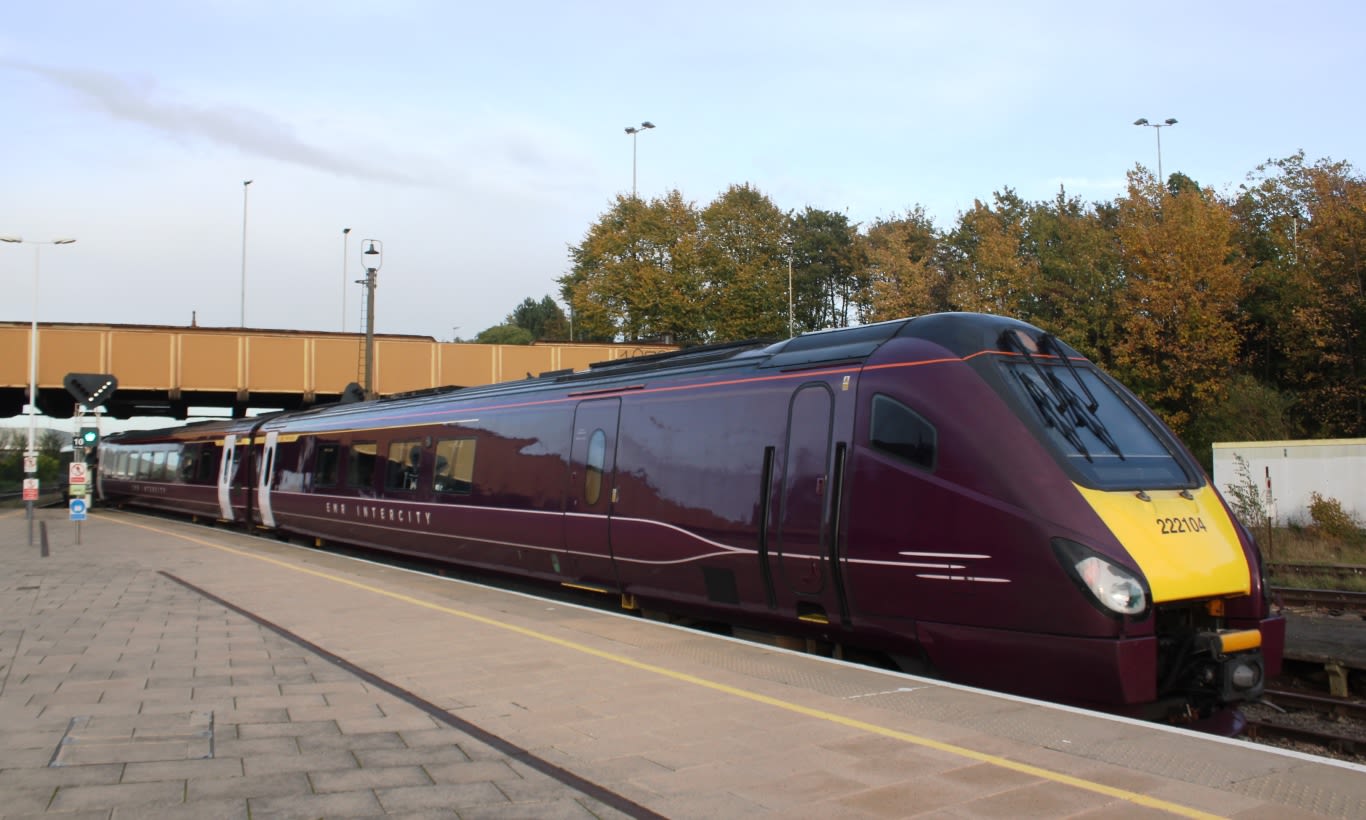

The number of people who use trains for transport in and out of Leicester has still not surpassed pre-Covid levels, according to the data collected by Open Leicester.
The railway usage data presented below was sourced from the Office of Road and Rail and can be found on Leicester City Council’s Open Data platform.
It is based on the number of people entering and exiting Leicester Railway Station. In March 2020, the UK went into a lockdown, but the data from the weeks following were still collected to share with the public.
There was a large decrease in the number of people entering and exiting the station during 2020/21 due to health and safety precautions for Covid.
Social distancing was only possible in limited ways on trains, and people didn’t always wear masks.
The increase in Covid cases also led to trains not running for a while, which affected railway usage in general.
Compared to 2018/19, there was not a large difference in the number of people entering and exiting the station in 2023/24.
Strikes and cancellations affect people’s journeys, and a lot of people couldn’t make it to their workplaces or universities due to the increase in railway issues.
This is one of the reasons trains had a decrease in usage.
The number of passengers entering and exiting Leicester railway station every year, between 2018 to 2024.
In 2018/19 there were 5,580,000 entries and exits from the station.
But there was a huge decrease in 2020/21 due to the Covid epidemic and subsequent national lockdown, with only 1,042,118 recorded entries or exits by people at the station. Leicester's lockdown lasted longer than anywhere else in Britain, with the final restrictions not being lifted until June 2021.
Train services had resumed in 2020 but with limited timetables and under social distancing measures.
By 2021/22 passenger movements had significantly increased again, with 3,548,600 people entering and exiting the station. This was still well below pre-Covid levels.
In 2023/24, a total of 5,303,830 people entered and exited the station. This number was still below the pre-Covid figures.
Students commuting to university in various ways including many who travel by train, such as Nourhan Dawan, who has been a student at De Montfort University for the past two years and is in the process of completing her psychology degree.
Train has always been her ideal transport method, and she uses it four times a week to commute to university and back home to Kettering.
Leicester's central location makes it the perfect place to commute. The city centre campus of De Montfort University is only a 15 to 20-minute walk from Leicester Railway Station, which is easily accessible and ideally positioned.
Using the Leicester train station has both its benefits and downsides for Nourhan. While it is time convenient, strikes and cancellations occurring very often lead to a rise in emotions.
“My emotions go from calm to upset really quickly, especially when I’m trying to get to university,” said Nourhan.
In one day, five trains were cancelled back-to-back, according to Nourhan, which led to her not being able to attend important lectures and having to email her professors about her absence.
Delays are also a common occurrence.
She said the train station staff are nevertheless helpful and ready to assist in difficult situations such as this.
“Their attentive and helpful attitude during such situations was reassuring,” said Nourhan.
The free Hop! buses are available outside the train station for people to travel around Leicester, including to DMU. This makes it easier for Nourhan to attend lectures and avoid being late.
Matching the rail usage statistics, Nourhan said that in her personal experience, 2023-24 was the busiest recent year for the train station.
The station tends to get very crowded and overwhelming during the day, specifically at noon and at 4-5pm when everyone gets off work to head to the comfort of their homes. Busyness on platforms made Nourhan feel many emotions, including fear.
“I tend to get scared when the platform gets busy due to the possibility of someone getting pushed onto the railway,” said Nourhan.
She nevertheless praised the accessibility and how efficient the railway station is, including the lifts that are available for people to use.
However, she stated that the station can potentially improve its gates that are used for scanning tickets.
Sometimes it takes too long to acknowledge the barcode, she said. This often causes chaos and frustration for passengers while waiting for assistance.
“The screen wouldn’t identify the barcode,” said Nourhan.
She advised university students to use railcards to find the best and cheapest train tickets, prepare for their journey ahead of time, and check their railway app for train schedules.
Time management is crucial for university students, especially when travelling by train.
 Built with Shorthand